He Was Great at Flooring and Terrible at Books. Here's What Changed.
By Chris Kimbell · · 3 min read
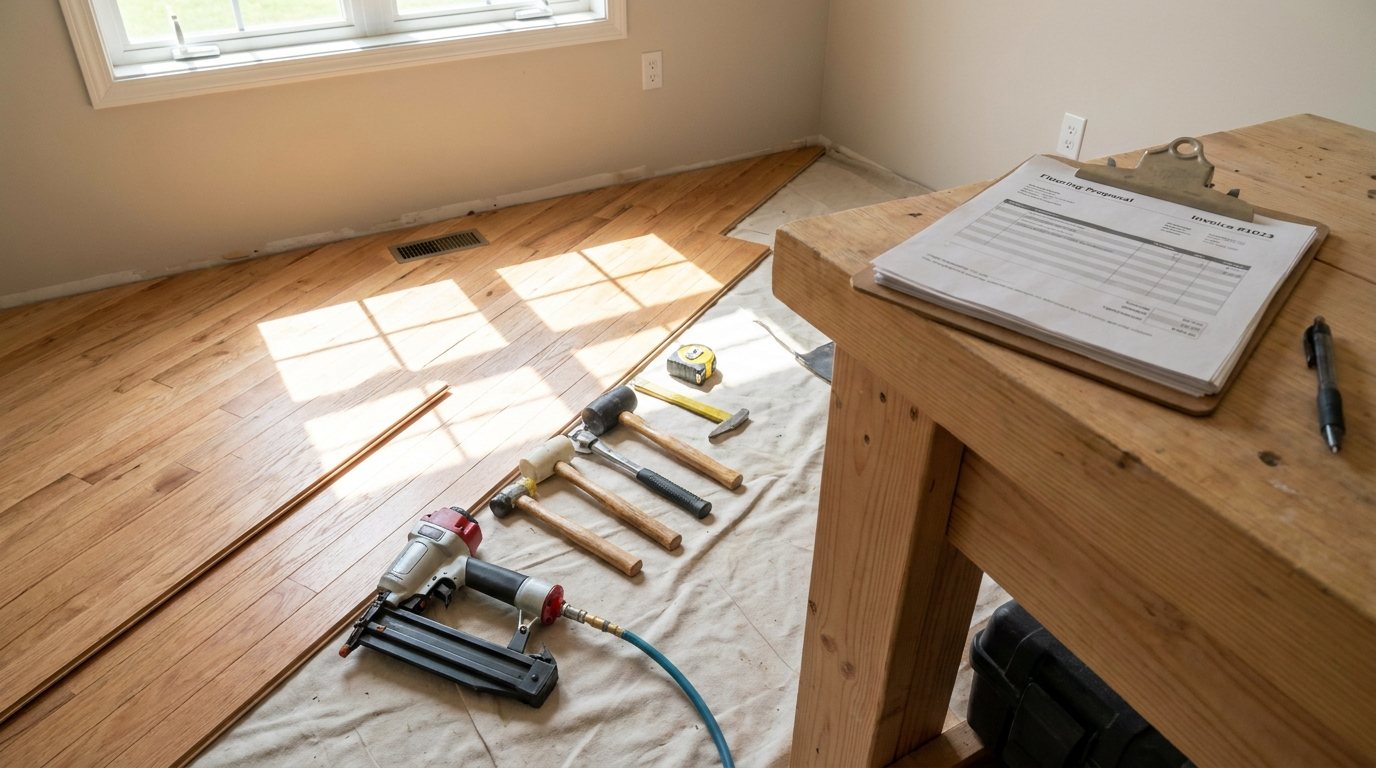
Marcus ran a flooring crew out of his truck for six years before things really started to take off. He added two guys, bought a second van, and landed a contract with a property management company that kept his calendar full. On paper, it looked like success. In reality, he had no idea if he was actually making money.
His bookkeeping system was a shoebox, not even a metaphorical one. A literal shoebox under his workbench held receipts for adhesive, underlayment, knee pads, fuel, and whatever else he'd bought that month. Once a week, maybe, he'd open QuickBooks and try to make sense of it. Most weeks he didn't bother.
By March of his seventh year, he was three months behind on reconciling his accounts. His business checking balance looked fine, there was money in there, but two of his guys were owed back pay on overtime he'd miscalculated, a supplier had sent a second notice on an invoice he thought he'd already paid, and he had no idea what he owed in quarterly taxes. He kept telling himself he'd catch up on the weekend.
The weekend never came. There was always another job, another estimate, another callback on a floor that had started lifting at the seams. The books stayed messy. Tax season hit him like a wall. His accountant called asking for records Marcus couldn't produce cleanly. He ended up filing an extension, paying a penalty, and spending three evenings in a row digging through that shoebox while his wife handled everything else at home.
The thing that finally broke him wasn't the penalty. It was a job he lost. A general contractor he'd been trying to land called, asked for a certificate of insurance and a profit-and-loss statement to qualify as a preferred subcontractor. Marcus could get the insurance certificate in a day. The P&L would have taken him two weeks to put together, and even then he wasn't sure it would be accurate. He passed on the job. That one stung.
A friend of his, another contractor, HVAC, mentioned he'd started working with a bookkeeping team called Blackfin Accounting. Said they handled everything month to month, responded fast when he had questions, and kept his taxes and his books under one roof so nothing fell through the cracks. Marcus reached out.
Within the first month, Blackfin caught three recurring charges Marcus had forgotten to categorize, software subscriptions he wasn't even using anymore. They reconciled the backlog, got his accounts current, and set him up with clean monthly reports he could actually read. For the first time, Marcus knew whether a job was profitable before he moved on to the next one.
By the following spring, he landed that general contractor relationship. When they asked for a P&L this time, he had it ready in an hour. The contractor told him most of their subs couldn't produce one at all. That was the moment Marcus realized he hadn't just fixed a bookkeeping problem, he'd made himself a more credible business.
If you're running a flooring operation and the books feel like something you'll deal with eventually, that eventually has a cost. It shows up as penalties, missed opportunities, and jobs you lose to competitors who just look more put-together on paper. If you want to talk about getting your books in order, Blackfin is a good place to start. No pressure, just a conversation.
This story is fictional but reflects experiences common among real service business owners who have worked with Blackfin Accounting.
This article is general information, not tax, legal, or investment advice. Every business is different, so call us at 406-404-8955 to talk about yours.

Chris Kimbell, Founder of Blackfin Accounting
About Chris and Blackfin