Marcus Couldn't Tell You His Profit Margin: Until He Finally Got His Books in Order
By Chris Kimbell · · 3 min read
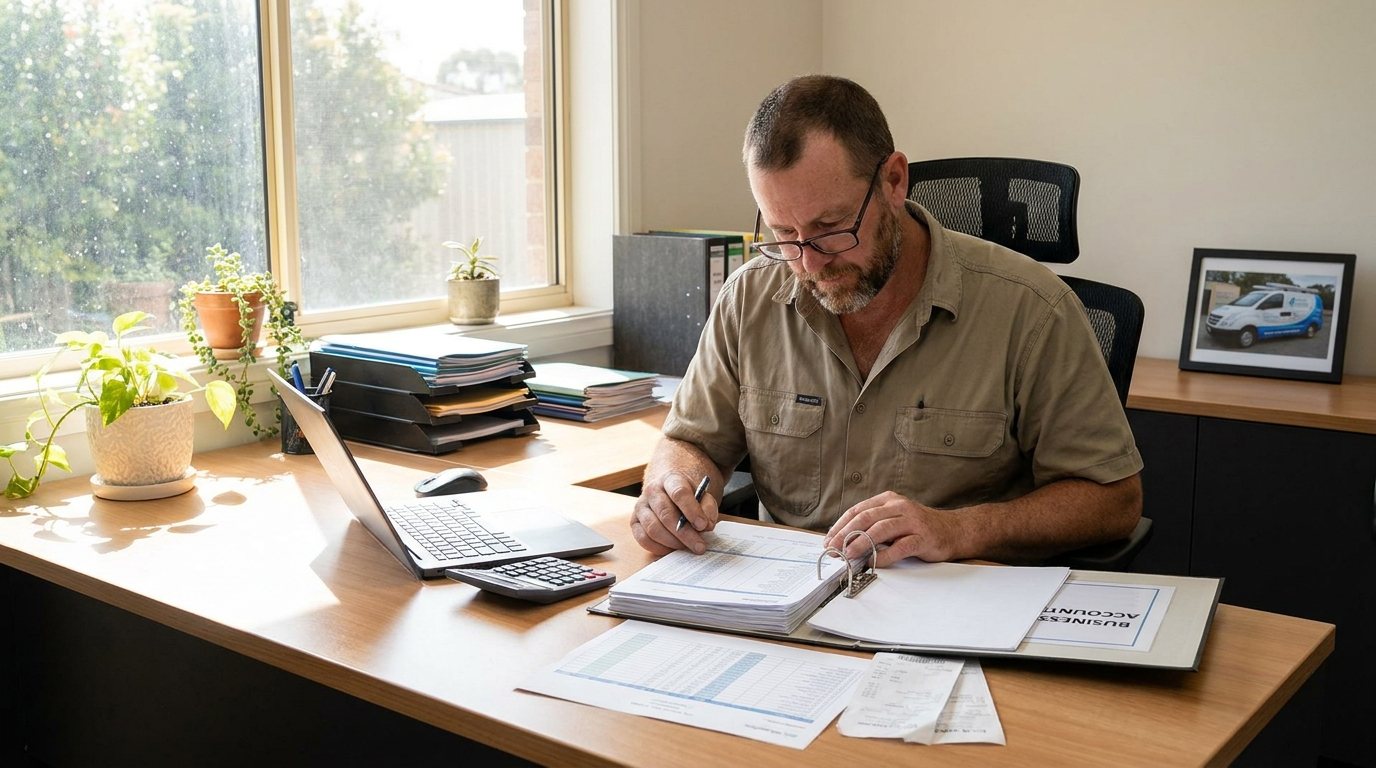
Marcus ran a window cleaning business for six years before the books finally broke him. Not the work itself, he loved that part. Early mornings, fresh air, watching a smeared storefront turn crystal clear. That he could do all day. It was the receipts stuffed in his truck's glove box, the invoices he'd half-entered into a spreadsheet at 11pm, and the sneaking feeling every April that he owed the IRS more than he'd saved. That part was killing him.
For the first few years, Marcus figured he'd handle the finances himself. He wasn't an idiot, he could read numbers. He bought a copy of QuickBooks, watched a couple YouTube tutorials, and told himself he'd catch up on everything once the busy season slowed down. But busy season never really slowed down. Then he hired two guys, and suddenly there was payroll to think about. Then a third employee. The spreadsheet stopped making sense somewhere around year three, and by year five it was basically fiction.
What really set him off was a Thursday afternoon in late February. He was trying to figure out whether he could afford a new water-fed pole system, a piece of equipment that would save his crew hours every week. Simple question. But he couldn't answer it. He didn't know his actual profit margin. He didn't know what he'd spent on supplies the past three months. He didn't even know, with certainty, what his biggest commercial client owed him. He just... didn't know. And that felt terrible.
He'd also started losing small amounts of money in ways he couldn't track. A vendor he'd overpaid twice. A customer who'd quietly stopped paying and fallen through the cracks because Marcus never followed up, not because he didn't care, but because he never saw it clearly laid out in front of him. Small leaks, but they add up when you're running a lean operation.
A buddy of his in the trades mentioned he'd started working with a bookkeeping team called Blackfin Accounting. Said it had taken some getting used to, handing over the financial side felt strange at first, but that he finally understood his business in a way he never had before. Marcus looked them up that same evening.
The first thing Blackfin did was go through the previous year's transactions and actually clean them up. It wasn't a lecture about what Marcus should have done differently. It was just two people sitting across from each other, or in this case, on a call, going through the numbers honestly. What came in, what went out, where things had gone sideways. Marcus found out he had a receivables problem he hadn't fully grasped. He also found out his margins on residential jobs were a lot better than commercial, which completely flipped how he thought about his customer mix going forward.
What surprised Marcus most wasn't the tax savings, though there were some. It was the speed. He'd gotten used to waiting days for answers when he emailed questions to his old accountant. With Blackfin, he'd send something and hear back within one business day. When he wanted to know if he could take on a new van loan without hurting his cash flow, he got a straight answer before lunch. That's not a small thing when you're trying to run a business.
By the following spring, Marcus bought the water-fed pole system. He knew exactly what it would cost him, how long it would take to pay off, and what kind of return he could expect. He wasn't guessing anymore. He was deciding. That shift, from guessing to deciding, is hard to put a price on, but it's the whole game when you're running a small crew and trying to grow without losing your shirt.
He still does the windows. He still loves that part. But the receipts aren't in the glove box anymore. There's no end-of-year dread. And he doesn't stay up at night wondering what the IRS is going to tell him in April. For the first time in six years, Marcus actually knows where his business stands.
If you're running a service business and the books are something you're just hoping to deal with later, later has a way of getting expensive. Blackfin Accounting works specifically with service business owners, people with crews, equipment, invoices, and real complexity. If you want to talk through what that looks like for your business, reach out. It's a pretty simple conversation.
*This story is fictional, but it reflects the kinds of experiences we hear from real clients on a regular basis.*
This article is general information, not tax, legal, or investment advice. Every business is different, so call us at 406-404-8955 to talk about yours.

Chris Kimbell, Founder of Blackfin Accounting
About Chris and Blackfin