The $2,000 Leak: What I Found Digging Through a Locksmith's Books
By Chris Kimbell · · 4 min read
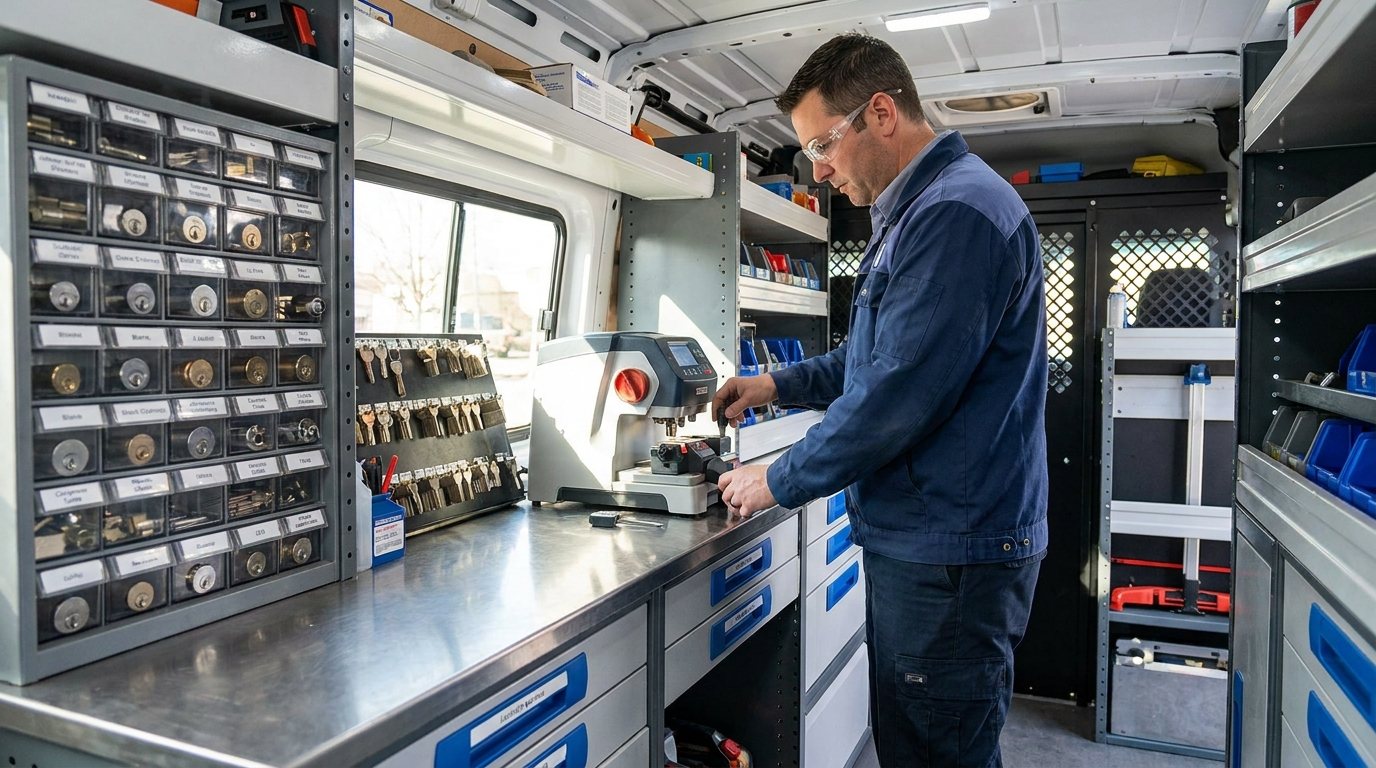
A few months back I was going through the books for a mobile locksmith client, I'll call him Dave, because that's close enough to his real name that he'll know it's him, but not close enough that anyone else will. Dave runs a one-truck operation, does car lockouts, rekeys, the occasional commercial job. He came to us because he felt like he was working nonstop but never actually getting ahead.
That feeling is usually a sign something's leaking somewhere, so I started digging through his expenses line by line. Locksmiths have this scattered cost structure that's easy to lose track of, key blanks, transponder chips, lock cylinders, code cutting software subscriptions, the fuel to get to six different job sites in a day. Most of it gets paid for on a card in the truck console or in cash from the glove box, and by the time it hits the books, half the context is gone.
What I found wasn't one big dramatic mistake. It was small stuff, repeated over and over. Dave had a subscription to a key code lookup service that he'd signed up for two years earlier, then basically stopped using once he switched to a different tool. Twenty-nine dollars a month. Doesn't sound like much until you realize it had been running for over a year after he stopped needing it. That's not the kind of thing that keeps you up at night, but it's exactly the kind of thing nobody notices because it's automatic.
Then there was the bigger one. Dave had two separate business credit cards, one from when he started out, and one he'd switched to later for the rewards points. He never fully closed the old one. Turns out he was still getting charged for a phone line tied to that first card, a line he thought he'd cancelled when he switched carriers. That was almost sixty dollars a month, quietly draining out for who knows how long, because nobody was cross-checking the two cards against each other.
Individually these things feel small. But when I added it up, Dave was losing somewhere close to two thousand dollars a year to subscriptions and charges he wasn't even using anymore. For a guy running a lean operation with no office, no employees, just him and his van, that's real money. That's a slow month's worth of margin, gone to nothing.
Here's the part that actually surprised me more than the leaks themselves, Dave wasn't careless. He's sharp, he knows his trade inside and out, he can pick apart a high-security lock faster than most people can find their car keys. But bookkeeping isn't his trade, and it's not supposed to be. He was so busy driving from job to job that he never had a quiet afternoon to sit down and actually look at where his money was going.
That's the thing I try to tell every service business owner I work with. Being bad at bookkeeping doesn't mean you're bad at running your business. It just means your attention is going where it should, toward the actual work, the customers, the trucks, the tools. But somebody needs to be looking at the numbers with a clear head, on a regular basis, or these small leaks turn into a slow bleed that nobody notices until the bank account looks lighter than it should.
Once we cleaned up Dave's accounts, cancelled the dead subscriptions, and set up a simple monthly review, something shifted for him. He started actually trusting his profit numbers instead of guessing. He picked his prices back up on emergency calls because he could finally see, in black and white, what his real costs were per job. Turns out he'd been underpricing his after-hours lockouts for years based on a rough guess he made when he started the business.
I'm not telling you this story to make Dave look bad, because honestly, this happens to almost every service business I look at eventually. Old subscriptions, duplicate charges, forgotten fees, it's incredibly common, and it's rarely because someone's irresponsible. It's because running the business day to day takes all your energy, and the books get whatever's left over.
If you're reading this and thinking about your own subscriptions, your own cards, your own monthly charges you haven't looked at in a while, that's a good sign you're due for a look. You don't need to become a bookkeeper. You just need someone keeping an eye on it who isn't also trying to answer calls and drive to the next job.
That's really the whole reason Blackfin exists. We're not here to judge how you've been running things, we're here to catch the stuff that's easy to miss when you're busy actually running a business. If it's been a while since anyone looked closely at your numbers, reach out to us at Blackfin Accounting. Worst case, we tell you everything looks fine. Best case, we find you a Dave-sized surprise sitting in your books.
This article is general information, not tax, legal, or investment advice. Every business is different, so call us at 406-404-8955 to talk about yours.

Chris Kimbell, Founder of Blackfin Accounting
About Chris and Blackfin